
















Setting Up a Training Room That Actually Works
Posted by OfficeAnything on Aug 18th 2026
A training room has to do more than any other room in the building. On Monday it's a new-hire orientation with rows facing a screen. On Wednesday it's a certification course split into small groups. On Friday, half the tables get pushed to the wall for an all-hands. Most training rooms fail not because the furniture is bad, but because it was bought for one layout and the room actually needs five.
If you're setting up a training room, the goal isn't to pick the nicest tables and chairs — it's to pick furniture that can change shape as fast as the agenda does. Below, we'll walk through how to plan the layout and what to look for in the furniture itself, then spotlight tables, chairs, and presentation equipment built specifically for rooms like this.
Layout Planning: Design for Reconfiguration, Not Just Rows
Most training rooms get planned around a single default layout — usually rows facing the front — and then get awkwardly rearranged by hand every time the format changes. Planning for reconfiguration from day one saves you that headache permanently.
Know your formats before you shop. Classroom rows work for lecture-style training. A U-shape or chevron layout works better for discussion-heavy sessions where people need to see each other. Pods of 4-6 work for breakout and group exercises. If your room needs to support more than one of these — and most do — the furniture has to be light enough and modular enough to move between them without a maintenance crew.
Plan aisles for the format, not just the room. A classroom layout needs roughly 36 inches between rows for people to get in and out without disrupting the room. A pod layout needs clearance on all sides of each cluster, not just the front. Measure for your most-used layout, then confirm the furniture you're choosing still leaves usable aisles in your second most-used layout too.
Don't forget where the furniture goes when it's not in the room. Flip-top and nesting tables only solve half the problem if there's nowhere to roll them. Plan for a storage wall or adjacent closet before you finalize the room layout, not after.
Furniture That Flexes With the Room
The single biggest lever in a training room is furniture that can change configuration without tools, without extra staff, and without much time.
Choose flip-top tables over fixed tables. A flip-top training table folds its surface vertically and nests against the next one, so a full room of 6-foot tables can collapse into a compact row along the wall in minutes. This is the difference between a room that gets reconfigured for every session and a room that quietly defaults to whatever layout was left over from last time.
Match your chairs to the same flexibility. Nesting chairs stack seat-to-back on a dolly or roll away entirely, and flip-seat designs fold the seat up so chairs tuck tighter under tables when they're not in use. If your tables can reconfigure in five minutes but your chairs take twenty, the chairs are the bottleneck.
Build in a mobile option for presentation equipment. A cart-mounted display or media station can move to wherever the front of the room ends up that day, instead of anchoring the whole layout to one fixed wall-mounted screen.
Presentation & Technology: Make the Front of the Room Work
Whatever layout you land on, the front of the room needs to work without a scramble before every session.
Keep cabling and power out of the walking path. Training rooms get reconfigured more than almost any commercial space, so cables that run to a fixed wall outlet become a tripping hazard the moment the layout changes. Tables and carts with integrated power solve this at the source.
Give presenters a dedicated surface. A shared table doubling as the presenter's station gets cluttered fast. A separate cart or lectern keeps a laptop, notes, and a display in one place that isn't also someone's seat.
Plan for both group and lecture-style tech needs. A mobile media cart works for wheeling a display to a pod layout; a fixed or lectern-mounted setup works better for lecture rows. If your room genuinely serves both formats, it's worth having both options rather than compromising on one.
Furniture Spotlight: Flip-Top & Nesting Training Tables

Special-T Caliber Collection Flip Top Nesting Training Room Table
$879 — An entry-friendly flip-top table built to nest tightly against the next one, making it easy to collapse a full room down to a compact storage row.

Special-T Transform-2 Flip Top Marker Board Training Table with Modesty Panel
$1,754 — A flip-top table with a built-in marker board on the underside of the top, so flipping it up for storage also turns it into a mini presentation surface.
Furniture Spotlight: Nesting & Stackable Training Chairs
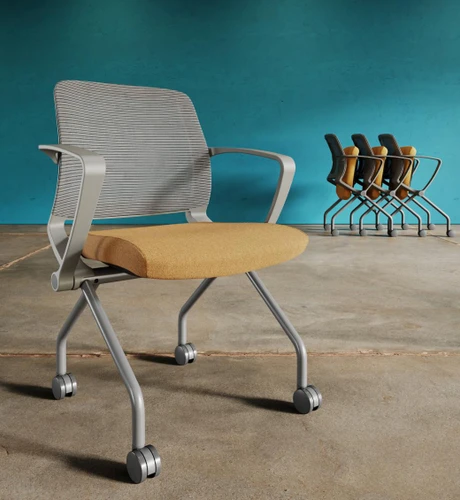
Wyatt Seating Fini Flip Seat Nesting Conference and Training Room Chair
$429 — A flip-seat chair designed to nest closely with the next one, so a full room of seating rolls away almost as fast as the tables do.
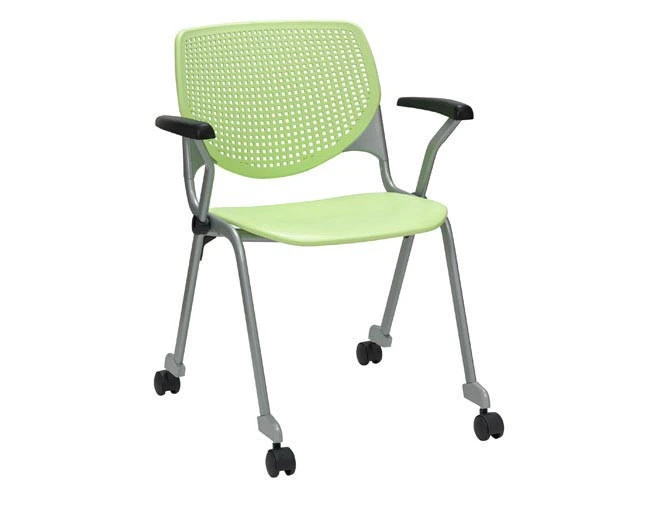
KFI Kool Stackable Polypropylene Training Room Chair with Arms
$544 — A durable, wipe-clean stackable chair that holds up to daily reconfiguration without showing wear, with arms for comfort during longer sessions.
Furniture Spotlight: Mobile Presentation Equipment
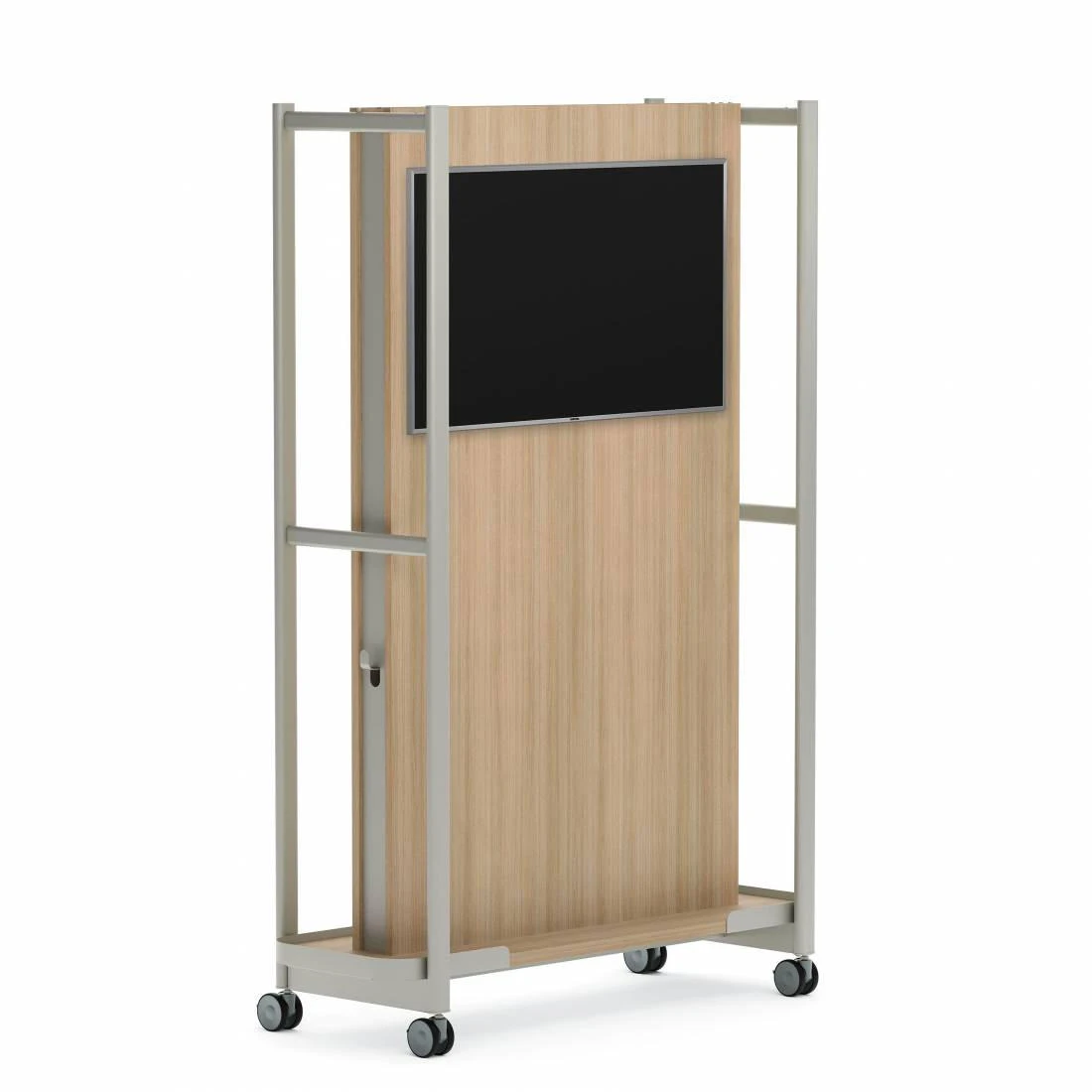
Global Collaborative Spaces Collection 48"W Media Cart
$2,361 — A rolling media station that can carry a display or laptop setup to wherever the front of the room ends up, so the presentation setup isn't locked to one wall.
Bringing It Together
A training room doesn't have to be redesigned every time the agenda changes — it just has to be built with furniture that expects to move. Plan your most common layouts first, choose flip-top and nesting pieces that match each other in how fast they reconfigure, and give presentation equipment a mobile home instead of a fixed one. Get those three things right and the room adapts to the training, instead of the training being planned around the room.
Have questions about sizing a training room layout or matching table and chair sets? Give us a call at 800-867-1411 or reach out through our contact page — we're happy to help plan it out before you order.